Luis Suarez Biography: Goals, Glory, Controversies, Family Life, and Net Worth Today
Luis Suárez is one of soccer’s most unforgettable strikers—loved for his ruthless finishing, debated for his controversies, and respected for how long he stayed elite across multiple leagues. This Luis Suarez biography covers his early life in Uruguay, his rise through Europe, his legendary Barcelona years, his late-career move to MLS, and the family life that has followed him through every chapter.
Basic Facts About Luis Suárez
- Full name: Luis Alberto Suárez Díaz
- Born: January 24, 1987
- Birthplace: Salto, Uruguay
- Age: 38 (as of January 17, 2026)
- Height: 1.82 m (about 5 ft 11 in)
- Position: Striker / Center-forward
- Current club: Inter Miami CF
- Spouse: Sofía Balbi (married 2009)
- Children: 3 (one daughter and two sons)
- Estimated net worth: About $70 million (public estimate)
Early Life in Salto: Hunger, Family Struggles, and Street Football
Suárez was born in Salto, a smaller city in Uruguay where life wasn’t glamorous and opportunities didn’t arrive easily. His childhood is often described as tough, and his family later moved to Montevideo when he was still young. He grew up playing football in the streets, the kind of setting that can sharpen a player quickly—because the games are physical, the space is tight, and you learn to protect the ball with your body.
That background also shaped his edge. Suárez has always played like a man who believes he must win the next duel to survive. Even when he became a global superstar, his style never turned soft or polite. He remained intense, confrontational, and fearless—sometimes in ways that thrilled fans and sometimes in ways that crossed a line.
Teen Romance That Became a Life Foundation
One of the most consistent parts of Suárez’s story is his relationship with Sofía Balbi. They began dating as teenagers, and when her family moved to Europe, it became a motivation for him to push harder in football. In the middle of transfers, media pressure, and career chaos, Suárez has often presented his family as his anchor.
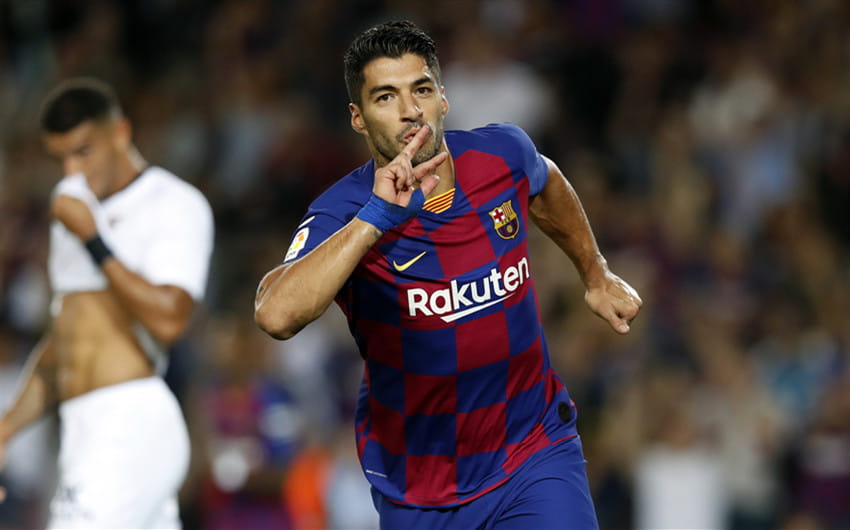
They married in 2009, and over the years their family grew to include three children. Suárez is also known for the wrist-kiss celebration connected to his daughter’s name, which became one of his signature habits after scoring.
First Big Steps: Nacional to Europe
Suárez began his professional career with Nacional in Uruguay, showing early signs of what he would become: sharp movement, natural finishing, and a striker’s instinct for chaos around the goal. Scouts noticed quickly because his goals didn’t look lucky. They looked repeatable.
From there, he moved to the Netherlands with FC Groningen, a major jump for a young Uruguayan. That transition wasn’t just about football—it meant adapting to a new culture, new language, and a European style that demanded structure. He didn’t stay quiet for long. Goals followed him, and bigger clubs started circling.
Ajax: A Star Is Built, and the World Starts Watching
Ajax is where Suárez truly became famous. He was prolific, aggressive, and built for the spotlight. His years in Amsterdam helped shape him into a complete striker: not only finishing, but creating chances, pressing defenders, and leading an attack. Ajax also gave him a stage where the world could see his personality—his fire, his swagger, and his willingness to push boundaries.
This period also showed the first major signs of the “two-sided” Suárez story: the brilliance and the volatility. Even early, he wasn’t simply a clean hero. He was a competitor who sometimes went too far, which would become a recurring theme later in his career.
Liverpool: Premier League Chaos, Genius, and a Career-Defining Peak
When Suárez joined Liverpool, he stepped into one of the toughest leagues on earth and somehow looked like he belonged immediately. The Premier League is unforgiving to strikers who can’t handle physical defending and relentless pace. Suárez not only handled it—he terrorized it.
His most famous Liverpool season was 2013–14, when he produced an unforgettable scoring run and nearly dragged Liverpool to a league title. Even non-Liverpool fans often admit that season was one of the best striker performances the Premier League has ever seen. He scored goals from angles that didn’t make sense, bullied center-backs, and turned half-chances into highlights.
At the same time, Liverpool is also where one of his biggest controversies followed him, which kept his reputation complicated. Suárez was never just “the goals.” He was always “the goals and the headlines.”
Barcelona: The MSN Era and the Years of Pure Greatness
Suárez’s move to Barcelona placed him among the sport’s biggest names and most demanding expectations. Instead of shrinking, he exploded. At Barcelona, he became part of the famous attacking trio with Lionel Messi and Neymar—an era where Barcelona’s front line looked unfair.
What made Suárez special in Barcelona wasn’t only scoring. It was how he connected the attack. He pressed like a defender, passed like a playmaker when needed, and finished like a classic No. 9. He could score tap-ins and screamers, but he also did the “ugly” striker work: dragging defenders, creating space, forcing mistakes.
His Barcelona résumé includes major trophies, massive goal totals, and the kind of peak form that puts a player in the “generation-defining” category. For many fans, this is the era that cemented him as one of the greatest strikers of modern football.
Atlético Madrid: Proving It Wasn’t Just Barcelona
After leaving Barcelona, Suárez joined Atlético Madrid—another test of whether he could still dominate without the same style of support. He answered loudly. Atlético’s football is often more intense and grind-heavy than Barcelona’s flowing approach, but Suárez fit because he thrives in hard moments.
He played with a point to prove, and that mentality fueled big goals and big performances. His time at Atlético reinforced that his greatness wasn’t only about being surrounded by stars. It was also about timing, instinct, and an elite striker’s refusal to disappear.
Back to South America: Nacional and Grêmio
Late-career chapters can feel like a quiet fade for many stars. Suárez’s didn’t. He returned to Nacional, which carried emotional weight because it connected him back to where he started. Then he played for Grêmio in Brazil, where he continued to show that even as his body aged, his striker instincts remained sharp.
These moves also reflected something personal: Suárez has always balanced career ambition with family stability. His later choices often seemed tied to quality of life and being in environments where he could still compete while keeping family close and comfortable.
Inter Miami: The MLS Chapter
Suárez joined Inter Miami to reunite with familiar faces and help build a super-club moment in Major League Soccer. The move brought global attention, packed stadiums, and a new wave of fans who hadn’t watched him weekly in Europe. In Miami, he didn’t arrive as a retirement act. He arrived to contribute, lead, and score.
Uruguay National Team: A Hero at Home
For Uruguay, Suárez is more than a club legend—he’s a national icon. He played in multiple major tournaments and became known for delivering in high-pressure moments. Uruguay is a small country with a massive football identity, and Suárez belongs to that tradition of ruthless, fearless forwards.
Even when controversies hurt his global reputation, many Uruguayan fans continued to defend him fiercely because they viewed his edge as part of what makes Uruguay competitive against bigger nations. Love him or hate him, his national-team story is a major reason he remains such a powerful figure in football culture.
Playing Style: What Made Him So Hard to Stop
Suárez is not the tallest striker and not the fastest winger-type forward, yet defenders have struggled with him for two decades. Why? Because his strengths stack together in a brutal way:
- Elite positioning: He arrives early to dangerous spaces, especially near rebounds and cut-backs.
- Finishing variety: Right foot, left foot, headers, chips, first-time strikes—he can score in multiple ways.
- Street-fighter mentality: He plays every duel like it’s personal, which forces defenders into mistakes.
- Creative nastiness: He improvises—backheels, quick turns, unexpected shots—before defenses can set.
At his best, Suárez combines the instincts of a classic poacher with the aggression of a pressing forward. That combination is why he produced elite seasons in multiple leagues, not just one system.
Controversies: The Part of His Legacy That Never Fully Disappeared
Any honest Luis Suárez biography has to address the controversies because they shaped how the world talks about him. His career includes incidents that brought suspensions and backlash, including biting incidents and major disciplinary moments that became global news. Those episodes harmed his image and created a permanent split in how fans view him: some see a flawed genius, others see someone who repeatedly crossed unacceptable lines.
The reason these controversies matter is that they sit right next to his greatness. Suárez is one of the rare players whose highlight reel and lowlight reel are both famous. That’s why his name still sparks arguments long after the final whistle.
Family Life: Wife, Children, and the Stable Side People Don’t Always See
While Suárez’s on-field reputation is intense, his off-field image is often centered on family. He married Sofía Balbi in 2009, and they have three children: a daughter (born 2010) and two sons (born 2013 and 2019).
That family consistency is a major contrast to the chaos of his on-field controversies. It’s also part of why fans who admire him tend to admire him deeply: they see a man who plays with wild emotion, but lives with strong loyalty to the people closest to him.
Net Worth: How Much Is Luis Suárez Worth?
Luis Suárez has earned elite money across multiple top clubs, plus sponsorship deals over many years. Public net worth estimates vary, but a widely cited figure places his net worth around $70 million.
His wealth typically comes from four main buckets:
- Club salaries: Long-term contracts across the Netherlands, England, Spain, Brazil, and MLS
- Bonuses: Trophy bonuses, performance incentives, and appearance-based earnings
- Endorsements: Brand partnerships and sponsorship work
- Business projects: Football-related ventures and partnerships over time
Legacy: A Top-Tier Striker With a Complicated Reputation
Luis Suárez will be remembered as one of the most productive strikers of his generation. He scored in the world’s biggest leagues, delivered in major tournaments, and stayed relevant longer than most players at his position. He also built a career that never felt quiet. Even when he wasn’t scoring, something about him created noise.
That’s the final truth of Suárez: he’s not a simple legend. He’s a full story—talent, trophies, controversy, family, and relentless competitiveness. And whether you admire him, criticize him, or somehow do both at once, his place in modern football history is permanent.
image source: https://www.fcbarcelona.com/en/card/1841260/luis-suarez